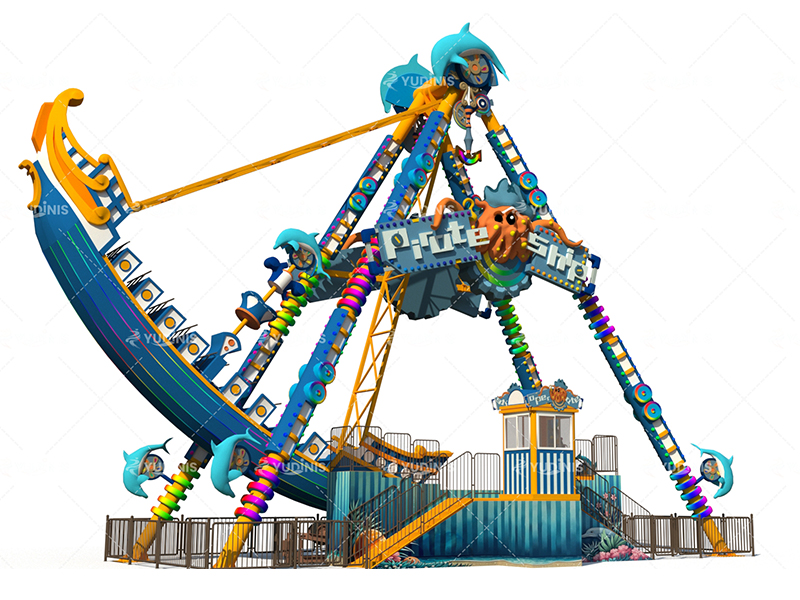
A coastal storm can leave salt, grit and moisture in places that an ordinary walkaround never reaches. For an ocean-themed swing ship ride, restraint inspections need a repeatable route rather than an improvised check after bad weather. This coastal storm restraint inspection route gives operators a practical way to inspect the guest-contact system before the ride returns to service.
Start With the Post-Storm Stop Decision
The route begins with the decision to keep the ride closed until inspection is complete. Record wind history, rainfall and any debris found in the area. Check the platform before staff step onto the moving assembly. The stop decision should identify who declares the ride ready and what evidence must be returned to the maintenance log before dispatch. If conditions remain uncertain, keep the ride closed and escalate the decision rather than allowing opening pressure to shorten the inspection.
Inspect Every Chair From the Outside In
Walk the hanging chair line in a fixed direction. Check each chair shell, suspension point, restraint bar, belt, latch and seat fixing. Look for salt film, grit inside moving joints and coating damage around fasteners. A swing ship ride post-storm checklist should use chair numbers so a technician can prove that every position was inspected rather than sampling the first few.
Test Restraint Movement Through Its Full Range
Open, close and lock each restraint through its designed adjustment range. Confirm that the locking mechanism engages cleanly and that no belt or bar binds against the seat. Check guest-contact surfaces for cracks or deformation. Test with the intended tools and record any component that feels different from the previous inspection. A restraint that requires extra force should remain tagged until a supervisor confirms the reason and approves the corrective action.
Separate Cleaning From Corrective Work
Cleaning should remove salt and debris without driving water into bearings or electrical enclosures. Keep the cleaning record separate from repair findings. If a restraint needs adjustment or replacement, tag the chair and remove it from service. Reviewing amusement park storm readiness planning helps the operator connect ride checks with paths, drains and nearby structures.
Document the Return-to-Service Evidence
Photograph the inspected chair line, completed checklist and any corrective action. Confirm the empty and controlled test cycles before reopening. Generic information on pirate ship ride restraint system helps explain the moving assembly, but the manufacturer’s instructions and local inspection rules control the final procedure.
Review the Route After Each Storm
If crews repeatedly find the same trapped grit or damp fastener, revise the inspection route or protective detail. Add storm exposure to staff training and make the checklist available at the control point. Review the route after every severe weather event and retain the completed sheets in the ride history file. A route that is fast, visible and traceable protects both guests and the park’s maintenance records.
Coastal storm readiness depends on a clear stop decision, numbered chair checks, full restraint testing, separated repair records and signed return-to-service evidence. The ThemeParkProjects coastal maintenance team can help build that procedure, and the equipment range is shown at https://themeparkprojects.com/ocean-themed-swing-ship-ride/.
Leave a Reply