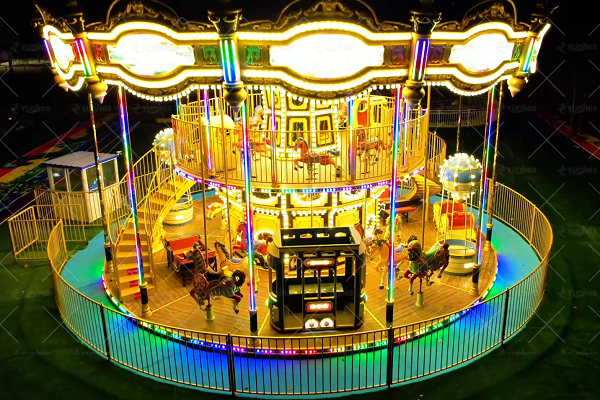
Upper-deck evacuation instructions can work in daylight and fail when the mall has switched to evening lighting. Guests may not see the stair edge, staff may miss a closed gate and emergency signs can disappear against bright theming. A double decker carousel nighttime evacuation marking review should test the route under realistic low-light conditions.
Run a Night Walkthrough Before Opening
Walk the full route with the ride stopped and only the lighting that will be available during an evacuation. Check the upper landing, stair treads, handrails, lower exit and the point where guests enter the queue. Ask someone unfamiliar with the layout to follow the route. Their hesitation shows where a sign or light is serving decoration rather than guidance. Note every place where a guest must stop to decide which direction to take.
Mark Stair Edges and Landings Clearly
Use high-contrast markings on stair nosings, landing edges and the gate threshold. Avoid a pattern that blends into the carousel artwork or produces glare. Confirm that marks remain visible when the moving platform is stopped at a different rotation. An upper deck emergency route lighting plan should distinguish the exit from the normal loading route without overwhelming the guest experience.
Light the Route Without Blinding Staff
Place emergency lights so they illuminate treads and gate latches rather than shining into the attendant’s sight line. Confirm that the route remains visible if the ride’s decorative lighting fails. Check shadows around columns, stairs and the lower exit. Reviewing mall carousel emergency route layout helps compare compact layouts, but local evacuation requirements determine the approved markings. Keep light fixtures protected from accidental contact and accessible for lamp or battery maintenance.
Keep Gates and Signs Visible in Every Position
A gate that looks closed in daylight can appear open when its direction sign is lost in shadow. Use clear open, closed and no-entry signs, with reflective or internally illuminated elements where required. Confirm that the signs remain readable when the queue is crowded and when staff stand between the guest and the sign. Staff should also carry a reliable secondary light.
Test Backup Power and Communication
Simulate the loss of normal ride and house lighting. Check emergency lighting duration, radio coverage and the visibility of the evacuation leader. Public material on carousel ride safety supports the need to coordinate the platform, station and guest route. Record every dark area and every command that could not be understood during the test.
Repeat the Drill During Evening Operation
Run a staffed exercise after the mall has changed to its evening lighting scene. Include families, a stroller and a guest who needs extra time. Revise signs or lights that performed differently from the planning walkthrough. Debrief with the attendants who actually controlled the gates and record the revised sequence in the operating manual. The Carousel Manufacturer night operations team can help review the layout, and equipment details are shown at https://www.carouselmanufacturer.com/product/amusement-park-double-decker-carousel/.
Nighttime evacuation depends on visible stairs, controlled lighting, readable gates and tested communication. A route is complete only when it works under the lighting guests will actually see.
Leave a Reply