Staff costs are one of the largest recurring expenses in any amusement park, and every motorised ride adds operators, technicians, and inspection duties. Parks with lean teams therefore look at unpowered attractions differently: they are not simply cheap to build, they are cheap to run. This guide explains which non-powered attractions for parks work best when the operating team is small, and how to design them so safety and guest experience are not compromised.
Attractions That Need Little or No Supervision
The best options for small teams are self-paced attractions where guests control their own experience. Free-form climbing structures, slide towers, sand play areas, and sensory gardens generally need one attendant per zone rather than one per unit. Because there is no ride cycle to start and stop, a single staff member can supervise a large area while maintaining clear sight lines. These low-staff outdoor attractions also reduce training time, which matters when seasonal staff turn over quickly.
Climbing Structures and Rope Courses
Climbing nets, rope courses, and bouldering walls offer high play value per square metre and accommodate many children at once. Look for modular designs with durable galvanised steel frames, replaceable rope elements, and clearly defined fall zones. Supervision is visual rather than operational, so one attendant positioned at the entrance can monitor the whole structure.
Slide Towers and Multi-Level Play
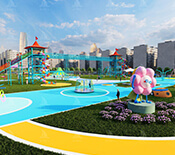
Slide towers combine climbing, tunnels, and multiple exits, which keeps guests engaged for long periods. Choose a design where exits are visible from the supervisory position and where the fall surfacing extends to the required distances. Modular towers can also be expanded later without rebuilding the whole area, an advantage for parks that grow gradually. A completed project such as the unpowered adventure park case shows how slide towers and climbing zones can be arranged for efficient supervision.
Sand, Water, and Sensory Zones
Sand pits, shallow water play, and sensory gardens attract younger children and their parents, who tend to stay within the zone while children play. They require attention to drainage and cleanliness rather than mechanical maintenance, and they extend dwell time near food and beverage outlets. Where water is used, keep the system simple: circulation pumps, filtration, and daily checks are enough for shallow play features.
Self-Guided Trail Attractions
Trails, mazes, adventure paths, and themed discovery walks spread guests across the park instead of concentrating them in one queue. Because guests move continuously, no ride operator is needed, and a single attendant can manage the entrance. Trails also suit uneven terrain, allowing parks to use land that would be too steep for mechanical rides.
Layout and Maintenance for Lean Teams
Design the park so that zones are visible from a central position, with paths that allow a single staff member to reach any area quickly. Use modular equipment with standard fasteners so repairs need basic tools, keep a small stock of wear parts such as rope sections and slide panels, and schedule weekly inspections instead of daily checks for low-wear zones. Durable materials – galvanised steel, UV-stable plastics, and marine-grade rope – are essential because they reduce the frequency of repairs.
For parks with limited staff, the ideal mix combines climbing structures, slide towers, sand or water play, and self-guided trails, all arranged for efficient supervision. Work with an experienced Dinis park equipment manufacturer that supplies modular systems and clear maintenance documentation, and review the design principles behind a safe playground slide before finalising the layout. To compare equipment options and staffing plans, visit https://themeparkprojects.com/outdoor-unpowered-amusement-park-solution/ and request a tailored proposal.
Leave a Reply