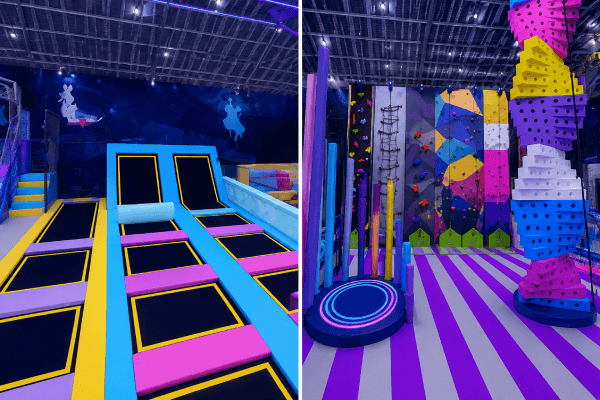
Two Attractions, One Floor Area
Every operator comparing attractions eventually asks the same question: which one earns more for the floor area it occupies? A ninja course vs trampoline park revenue is really a question about density, session length and price per guest. Trampoline parks sell bouncy, low-skill fun in short sessions to large groups, while ninja courses sell a challenge that rewards practice and invites repeat visits. Neither is automatically better. The honest answer depends on your ceiling height, your staffing model and how much of the day your venue can keep the attraction busy rather than empty.
Revenue per Square Meter Explained
Revenue per square metre is not the same as ticket price. Dividing the average spend per guest by the area a guest actually occupies during a session gives a figure you can compare across attractions. A which attraction earns more per square meter only makes sense once dwell time is included, because a course that turns guests over in twelve minutes can out-earn a trampoline court that holds them for an hour even at half the ticket price. Measure throughput in the busiest hour, not the average, since that hour usually decides whether the month was profitable.
Throughput, Dwell Time and Session Pricing
Most successful venues stop treating the two as rivals. Pairing the ninja run with a commercial trampoline park lets one wristband cover two moods: guests who want to jump and guests who want to compete. It also smooths the day, because families arriving for the trampoline often add a timed ninja run once they see the leaderboard. Mixed floors raise the average visit length, and a longer visit is usually worth more than a higher ticket price on the door.
Installation and Operating Costs Compared
Operating cost is where the comparison gets uncomfortable. Both attractions need supervision, padding, inspections and insurance, but their wear patterns differ. Public background on the trampoline park shows how quickly the format spread, and the same expansion pushed operators to compete on price rather than experience. Ninja courses have a different cost profile: fewer square metres per guest, more staff attention per run, and consumable parts such as slings and grips that are replaced on a schedule. Model those over three years rather than one.
Fitting Both Attractions Into One Venue
Floor area is the constraint that finally decides the argument. A ninja course can climb a wall and use vertical space that a trampoline court must leave empty for safety, which is exactly why the two fit together so well in a building with height. Working with a Miland indoor playground manufacturer lets an operator price both attractions against one layout drawing, one installation crew and one spares list, so the comparison is based on real numbers instead of brochure claims.
Deciding With Real Numbers
Decide with your own measurements: ceiling height, usable area, target age groups, peak-hour turnover and the staffing you can afford to schedule. Then compare the two attractions in the same spreadsheet, with the same assumptions about opening hours and seasonality. Categories: Indoor Playground, Ninja Course, Trampoline Park, Family Entertainment Center, FEC Attractions, Commercial Playground Equipment. Tags: ninja course, trampoline park, revenue per square meter, family entertainment center, fec attractions, indoor attractions. https://www.milandplay.com/product/ninja-course/
Leave a Reply