An amusement park double decker carousel can look balanced while one deck fills faster than the other. Guests hesitate at the stairs, staff cannot see both landings, and the upper level waits for riders while the lower deck has empty horses. Designing double decker carousel upper deck rider flow requires one controlled entry point, clear deck assignments and a loading rhythm that keeps both levels productive.
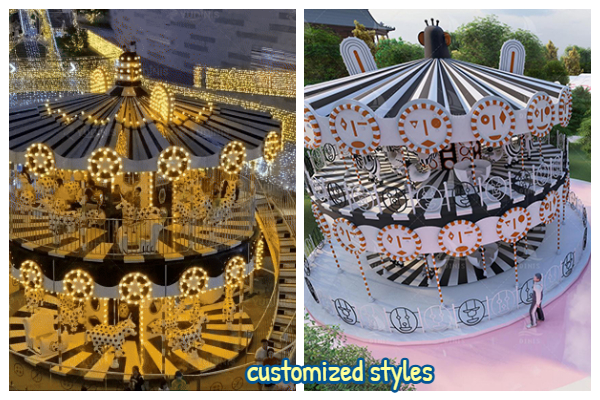
Start With One Entry and Two Controlled Load Paths
Place the ticket check before the deck split so staff can confirm the rider has the correct access. The path should then divide without forcing families to cross the returning exit flow. Use floor markings, gates and clear sight lines to identify the lower deck line and the upper deck line. The guest should understand where to wait before reaching the stairs, not after blocking the landing.
Assign Staff to the Deck Split Point
The split position needs an attendant who can see the stair landing, the lower loading zone and the control operator. This person can hold the upper queue when a slower rider needs help and release lower-deck seats without breaking the cycle. Write the release sequence into the operating procedure. A two level carousel loading balance plan also needs a relief attendant, because the most important sight line should never be left uncovered.
Balance Boarding Times Across Both Levels
The upper deck needs extra time for stairs, seat selection and exit. Compare that time with the lower deck, then decide whether both decks load together or one begins earlier. Avoid releasing guests onto the stairs while another group is descending. Measure the number of riders, not just the number of occupied animals, because adults may stand beside small children. The dispatcher should receive a clear ready signal from every loading area.
Protect Stairs and Landing Clearance
Stair treads, handrails and landings are part of the ride capacity. Keep bags and strollers out of the stair approach and provide a separate waiting area for companions who do not ride. Check whether a guest who changes their mind can leave without moving against the incoming queue. Reviewing two level carousel project for a shopping mall helps planners compare stair and landing layouts in a constrained venue.
Coordinate Accessible Ride Options
Clarify which seats and access routes are available for guests who cannot use the stairs. A companion may need to wait on the lower level while the rest of the family rides above. Publish that rule before the queue, so staff do not have to resolve a family disagreement at the loading gate. Public material on carousel deck loading and movement supports the need to coordinate the moving platform, deck access and operating routine.
Measure Flow During the First Busy Week
Record the queue at each deck, the time from split to boarding and the frequency of empty seats. Watch where guests stop near the stairs and when the upper line blocks the lower approach. Adjust the release timing, signage or queue layout with the ride operator and safety team. After a few peak cycles, the site should show a stable rhythm rather than a crowd that moves only when staff intervene.
Rider flow on a two-level carousel depends on entry control, a visible split point, balanced loading, protected stairs and measured performance. Investors and operators should plan the guest journey with the same care as the ride itself. The Carousel Manufacturer circulation design team can support that review, and the product details are available at https://www.carouselmanufacturer.com/product/amusement-park-double-decker-carousel/.
Leave a Reply