A double decker carousel can load two platform rings at the same time, which doubles capacity only if the staffing plan keeps pace with that geometry. When both decks fill simultaneously, the ride becomes a small operational system rather than a single loading position. This guide explains how to plan double decker carousel ride staffing for that situation.
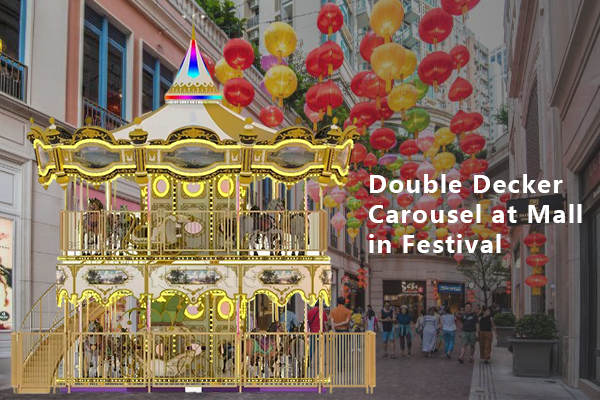
Map the Platform Before Counting Staff
Draw the platform and mark every position an attendant must reach: the entrance gate, the stairs, the upper deck, the lower deck, the exit and the control console. The number of staff follows from the sight lines between those points, not from a routine copied from a single-level carousel. If one person cannot see the upper deck from the control position, that deck needs its own attendant.
Separate the Roles Clearly
A workable structure usually has one operator at the control console, one attendant on the lower platform and one on the upper deck, with a fourth person helping at the gate during peak periods. Each role needs a defined sequence: who checks restraints, who counts seats, who clears the platform and who gives the signal to start. Writing those steps down prevents the hesitation that slows a mixed group.
Design the Loading Sequence for Two Decks
Both decks should not be released at exactly the same moment if that causes a crowd at the stairs. Stagger the release so that the lower platform fills first, then the upper deck, and confirm that the stairs remain clear for guests coming down. Careful carousel loading staff for two decks planning turns that sequence into a routine that can be repeated every cycle without confusion.
Train for the Upper Deck Specifically
The upper deck carries its own risks: a longer rescue route, a narrower walkway and guests who may hesitate on the stairs. Staff need to practise clearing the deck, assisting a guest who cannot manage the steps and communicating with the operator when the level is ready. A short rehearsal before opening is far more useful than a long written procedure nobody has walked through.
Balance Staffing Cost Against Capacity
Extra attendants cost money every operating day, so the staffing plan should be matched to demand rather than fixed for the whole season. Peak days justify three or four staff, while quiet periods may run with two. Reviewing completed double decker carousel case studies shows how operators with different visitor profiles organise the platform, which helps a new park set realistic staffing levels.
Check Supervision and Emergency Procedures
Finally, confirm that the control position has a clear view of both decks, that the emergency stop is reachable and that the evacuation route from the upper level is practised. The operating routine of a carousel is described in general material on carousel ride operations, and the two-level version simply adds a second platform to that same discipline.
Staffing a double decker is a layout and sequencing exercise. Map the platform, separate the roles, stagger the loading of both decks, train specifically for the upper level, match staffing to demand and confirm supervision and evacuation. Operators comparing machines can review the range from Carousel Manufacturer ride operations team and open the product page at https://www.carouselmanufacturer.com/product/double-decker-carousel-ride-for-sale/.
Leave a Reply